Can AI Give Legal Advice After a Car Accident? | PCT Law
Inured in an Accident?
Fill out this form for a free case evaluation!
Contact Us
Phillips, Cymerman & Trager, S.C. — Milwaukee Personal Injury Attorneys
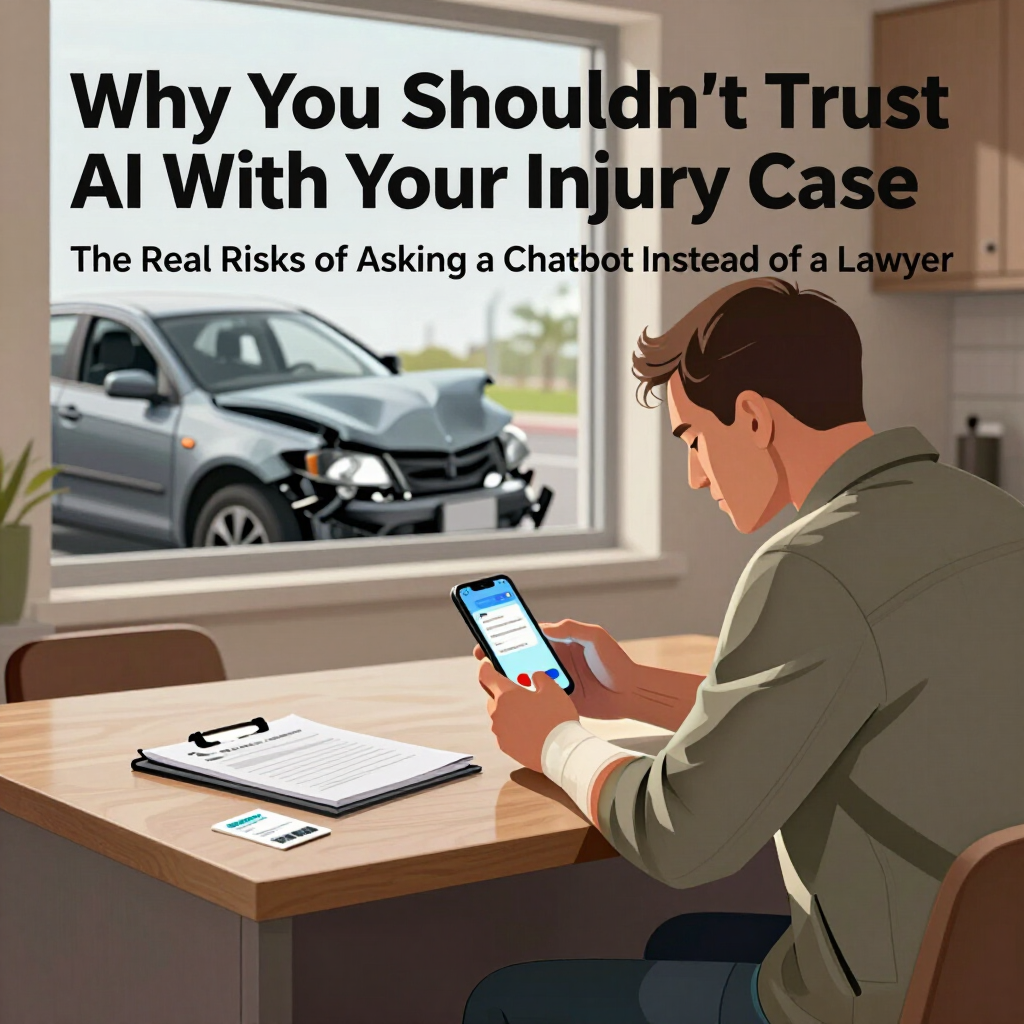
You've been in a car accident. It's 11 p.m., you're sore, you're worried, and the insurance adjuster left a voicemail that made your stomach drop. So, you do what millions of people now do: you open an AI chatbot and type, "The other driver's insurance says the accident was my fault. What should I do?"
The answer comes back instantly. It's articulate, confident, and organized into tidy bullet points. It “feels” like legal advice.
It isn't. And relying on it could cost you your case.
AI tools like ChatGPT are remarkable at many things, and we're not here to tell you technology is bad. But when your health, your finances, and your legal rights are on the line, here's what an AI chatbot can't do for you — and why it matters.
1. AI doesn't know Wisconsin law — it knows what Wisconsin law sounds like
AI chatbots generate answers by predicting plausible-sounding text, not by verifying the law. They routinely blend rules from different states, cite statutes that have been amended, or invent case law that simply doesn't exist. Courts across the country have now sanctioned lawyers who filed briefs containing AI-fabricated citations — and if AI can fool trained attorneys, it can certainly mislead an injured person searching for answers at midnight.
Personal injury law is intensely state-specific. Wisconsin's rules on comparative negligence, damage caps, and claims against government entities differ from Illinois', Minnesota's, and everyone else's. An answer that's roughly right for "most states" can be exactly wrong for you.
2. Deadlines are unforgiving — and AI won't calendar yours
Every injury claim runs against a statute of limitations, and some claims carry much shorter notice deadlines measured in *months*, not years. Which deadline applies depends on facts an AI never asks about: who the defendant is, whether a government entity is involved, when the injury was discovered, whether the injured person is a minor.
A chatbot might tell you that you "generally have a few years to file." A licensed attorney will tell you which deadline applies *to your case*, and make sure nothing lapses while you're recovering. Miss the deadline, and it doesn't matter how strong your case was — it's gone.
3. AI can't evaluate what your case is actually worth
Ask a chatbot what your claim is worth and you'll get generic ranges pulled from the internet. What you won't get is judgment: how a Milwaukee County jury tends to view cases like yours, how your medical records will read to an adjuster, whether your future treatment needs are being counted, or how Wisconsin's comparative negligence rule changes the math if the insurer claims you were partly at fault.
Insurance companies know injured people are underinformed. Their first offer is built on that assumption. An experienced attorney knows what full value looks like — and insurers know which law firms will actually take a case to trial.
4. Nothing you tell a chatbot is privileged
When you talk to a lawyer, attorney-client privilege protects the conversation. When you type your accident details into an AI tool, you have no privilege at all. Depending on the service and its settings, your words may be stored, reviewed, or used to train future models — and statements you make about your accident could potentially be discoverable later.
Think about that before describing fault, injuries, or what you "should have done differently" to a chatbot. In a legal dispute, your own words are evidence. A privileged conversation with counsel is the safe place to think out loud; a chatbot is not.
5. AI tells you what's typical. A lawyer fights for what's yours
Even a perfectly accurate AI answer would still only describe the law in general. It can't interview witnesses, preserve dashcam footage before it's overwritten, order the police report, line up medical documentation, negotiate with the adjuster, or stand up in a Wisconsin courtroom. It has no duty of loyalty to you, no malpractice accountability, no license on the line. When an AI is wrong, you bear 100% of the consequences.
A licensed attorney is legally and ethically bound to act in your interest — and does the work, not just the explaining.
Where AI can help (and where to draw the line)
Used carefully, AI can help you understand unfamiliar terms, organize a timeline of events, or prepare questions to ask a lawyer. That's a fine use. The line is simple: use AI to get ready for a conversation with an attorney — never as a substitute for one.
And here's the part many people don't realize: getting real answers doesn't cost anything. Like most personal injury firms, we offer a free case evaluation, and you pay **no fee unless we win**. The chatbot is free — but so is talking to an actual Milwaukee injury attorney who is accountable to you.
Injured in southeastern Wisconsin? Get answers you can act on
If you or a loved one has been hurt in a car accident, a fall, or on someone else's property, don't gamble your recovery on a plausible-sounding paragraph from a machine. Talk to a lawyer who knows Wisconsin law, knows the local courts, and answers for the advice they give.
Phillips, Cymerman & Trager, S.C. has represented injured people across Milwaukee and southeastern Wisconsin for decades. Call (414) 271-4262 or visit themilwaukeelawyer.com for your free, no- obligation case evaluation. Every call gets answered — by a person.